

Our Products
Matching Memory Game x2
Matching Memory Game x2
Couldn't load pickup availability
*All pictures shown are for illustration purpose only. Actual product may vary.
Products available through Always Home Connected are sold for adult use and are not intended for use by children.
Description
Description
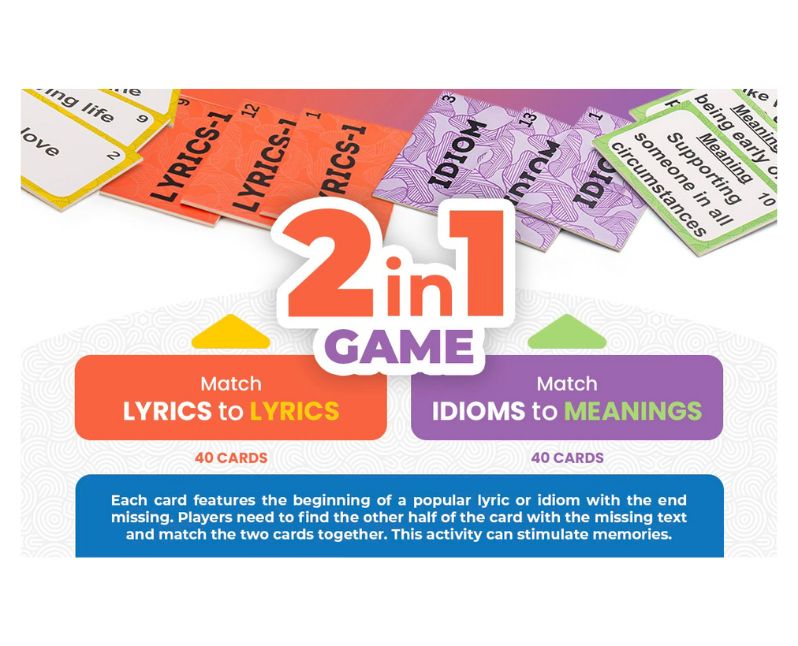
Card Games for Elderly: Each card features the beginning of a popular lyric or idiom with the end missing. Players need to find the other half of the card with the missing text and match the two cards together. This activity can stimulate memories.
Large, Easy-to-Read Text: Our memory games for seniors with dementia are age-appropriate and not childish. Each card features large, clear text to make reading easy for those with visual impairments or cognitive decline.
Made from Thick Materials: Each card is made from a thick, durable material that is easy to handle, even for those with unsteady hands. All players, regardless of their dexterity, can participate in the game without difficulty.
Includes Conversation Prompts and Fun Facts: Our memory games for dementia adult patients come with a flyer filled with conversation prompts and fun facts related to the themes of the cards. They also include a second flyer describing different ways to engage with the game for different cognitive levels.
Product Size
Product Size
9x6x2 inches
Material
Material
80 Durable Thick Cards designed specifically for older adults, with large easy to read text and high contrast printing that’s gentle on the eyes.
Benefits
Benefits
This matching card game is thoughtfully crafted to support cognitive engagement in seniors, including those experiencing memory loss, dementia, or Alzheimer’s. Matching activities like this help stimulate short-term memory and pattern recognition, key cognitive skills that can decline with age. Regular use can encourage mental stimulation and provide cognitive exercise that supports brain health, helping to slow cognitive decline and maintain mental clarity.
Beyond the cognitive benefits, the format encourages social interaction — it can be played one-on-one with a caregiver or in group settings, fostering connection and conversation. That social engagement is itself beneficial for emotional well-being and mental health, helping to reduce isolation and promote a sense of accomplishment.
Delivery Info
Delivery Info
The delivery time and cost depend on where you live, when purchased and if in-stock.
Relevance to Dementia Stage
Relevance to Dementia Stage
Early-Stage Dementia: In early-stage dementia, recognition, attention, and problem-solving skills are often still relatively strong. The Matching Memory Game x2 provides a gentle cognitive challenge that supports short-term memory, visual scanning, and concentration without being overwhelming. Matching familiar images or concepts encourages independent play and reinforces confidence through successful completion. The option to play competitively or cooperatively allows individuals to engage in a way that feels comfortable and enjoyable, promoting both cognitive stimulation and social interaction.
Middle-Stage Dementia: As dementia progresses into the middle stage, short-term memory and expressive language may fluctuate, but recognition skills often remain more intact. The Matching Memory Game x2 shifts the emphasis from recall to recognition, which helps reduce frustration while still providing meaningful engagement. Using fewer cards, simplified rules, or guided play allows participants to experience success. The game supports preserved long-term memory, encourages conversation and connection, and fosters a sense of accomplishment through repetition and familiarity.
Late-Stage Dementia: In late-stage dementia, cognitive processing and active problem-solving are significantly reduced, but emotional awareness and sensory engagement often remain. The Matching Memory Game x2 can still be used in a supportive, one-on-one setting by focusing on visual recognition, touch, and shared attention rather than completion of the task. Familiar images may prompt moments of recognition, smiles, or eye contact, even without active matching. At this stage, the goal is connection rather than cognition, helping maintain dignity, inclusion, and comforting human interaction.