
Our Products
Trivial Pursuit Generations Card Game
Trivial Pursuit Generations Card Game
Couldn't load pickup availability
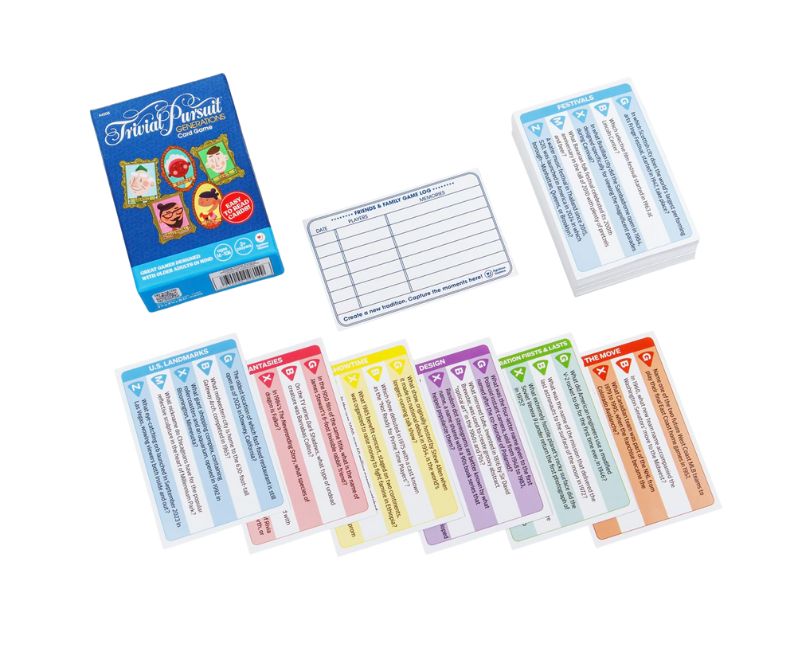
Keep the fun going with the Trivial Pursuit® Generations Card Game! Packed with new questions crafted for every generation, it’s a quick, laughter-filled way to bring everyone together. Play it on its own for fast-paced trivia fun or combine it with the full Trivial Pursuit® Generations board game for an even bigger family showdown. Play as a stand-alone game or as an expansion pack for the original Trivial Pursuit® Generations game.
*All pictures shown are for illustration purpose only. Actual product may vary.
Products available through Always Home Connected are sold for adult use and are not intended for use by children.
Product Size
Product Size
1.5x3x5
Material
Material
The game includes compact, easy-to-handle trivia cards stored in a small tabletop box, making it convenient for home use, adult day programs, or travel. The cards are made from durable cardstock with clear printing and straightforward layouts. While not oversized, the cards are lightweight and manageable for most older adults, especially when read aloud in group or one-on-one settings.
Benefits
Benefits
Trivial Pursuit: Generations supports cognitive stimulation, reminiscence, and social connection. Trivia from familiar decades taps into long-term memory, which often remains stronger than short-term memory as people age. The game encourages conversation, storytelling, laughter, and peer interaction, all of which support emotional well-being and reduce isolation. Because questions can be read aloud and answered collaboratively, the game is flexible and adaptable for varying abilities.
Delivery Info
Delivery Info
The delivery time and cost depend on where you live, when purchased and if in-stock.
Relevance to Dementia Stage
Relevance to Dementia Stage
Early Stage: In early-stage dementia, individuals often retain strong long-term memory, language skills, and a desire for mentally engaging activities. Trivial Pursuit: Generations is especially effective at this stage because it allows players to access knowledge from their own era, reinforcing confidence and identity. Answering questions, discussing memories tied to the trivia, and engaging in friendly competition help maintain cognitive engagement while supporting social connection.
Middle Stage: As dementia progresses, recall may become less reliable, but recognition and familiar memories often remain accessible. At this stage, the game works best when played collaboratively, with questions read aloud and group discussion encouraged. Even if individuals cannot answer correctly, they may recognize the topic, share a related memory, or enjoy listening to others. The emphasis shifts from accuracy to participation, conversation, and emotional connection.
Late Stage: In late-stage dementia, cognitive processing and verbal expression are limited, but emotional responsiveness often remains. Trivial Pursuit: Generations can still be meaningful when used as a listening and reminiscing activity, with caregivers reading questions and sharing answers aloud. Individuals may respond with facial expressions, brief comments, or emotional reactions tied to familiar eras or topics. The value at this stage lies in inclusion, comfort, and the sense of being part of a shared experience rather than active gameplay.